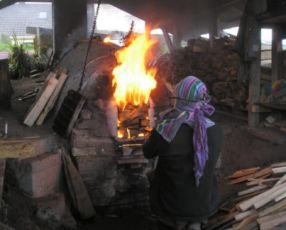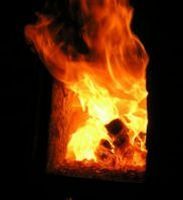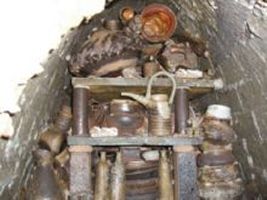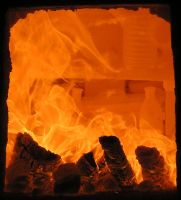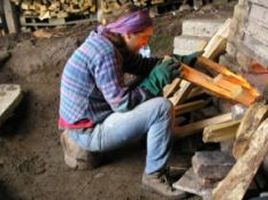
One of the oldest methods of firing clay is the Japanese art of Anagama. Here the elements of earth and water are brought together with fire and wood, in a culmination of the potters art, to achieve a transformation of stunning beauty. Since the fifth century the tradition of Anagama firing has been part of the potters art and the distinctive colours that are the mark of Anagama are much prized by potters and collectors alike. The technique has spread from Japan, and today a small but dedicated body of woodfiring potters exist around the world. Many examples of their work can be seen in museums and collections, a testiment to a process that has not changed since its inception 1500 years ago.
In 2001
a group of enthusiastic potters came together to build an Anagama Kiln in
County Kerry in Ireland. Since then the Kiln has been fired regularly. The
unpredictabilities can mean that disapointment and satisfaction often lie
close together, but with every firing the techniques and possibilities of
this method have been explored and the experience and skills of the group
have grown. It takes five tons of carefully cut wood and the potters constant
attention to reach a temperature of over 1300 degrees. After five days and
nights in the firestorm of the kiln expectations run high, but the beauty
of the process lies in this uncertainty and the resulting layers of natural
wood ash capture the dynamics of the flame in the vibrant colours and textures
that are so sought after by potters.